TCP vs UDP: When to Use What, and How TCP Relates to HTTP
Let’s start with a simple idea.
The Internet Needs Rules to Send Data
The internet is just computers talking to each other.
But computers don’t magically understand:
How fast to send data
What to do if data is lost
Whether order matters
Whether accuracy matters
So we need rules for communication.
These rules are called protocols.
Two very important ones are:
TCP
UDP
They solve different problems.
What Are TCP and UDP?
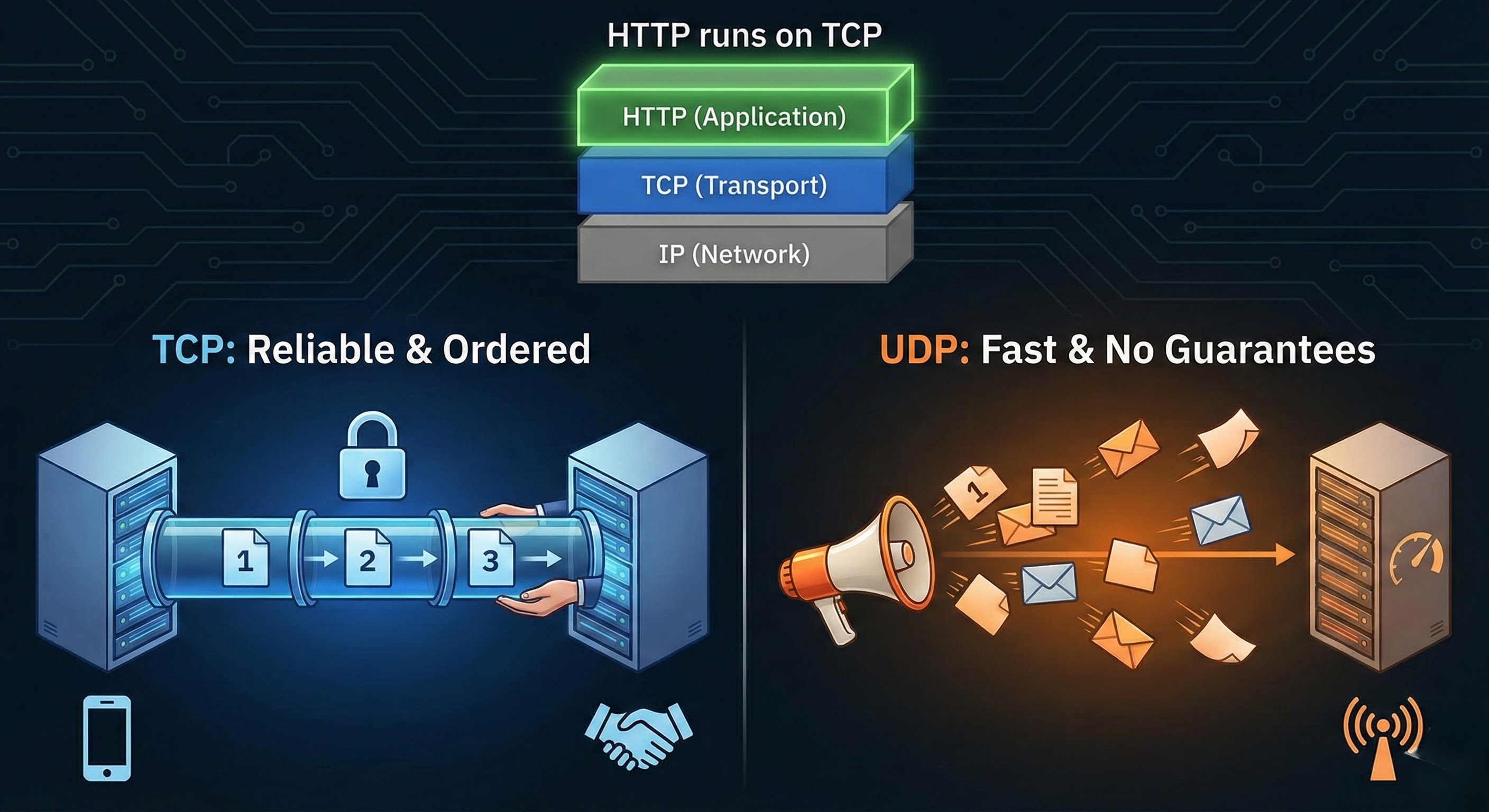
TCP (Transmission Control Protocol)
TCP is:
Safe
Reliable
Orderly
It’s like:
“Make sure everything arrives correctly.”
UDP (User Datagram Protocol)
UDP is:
Fast
Less reliable
Lightweight
It’s like:
“Send it quickly, don’t ask questions.”
Both are valid.
Both are widely used.
They just serve different needs.
Why Do We Even Need Two Different Protocols?
Because not all data is equally important.
Sometimes:
- Losing data is unacceptable
Other times:
- Speed matters more than perfection
TCP and UDP exist to give developers a choice.
Key Differences Between TCP and UDP
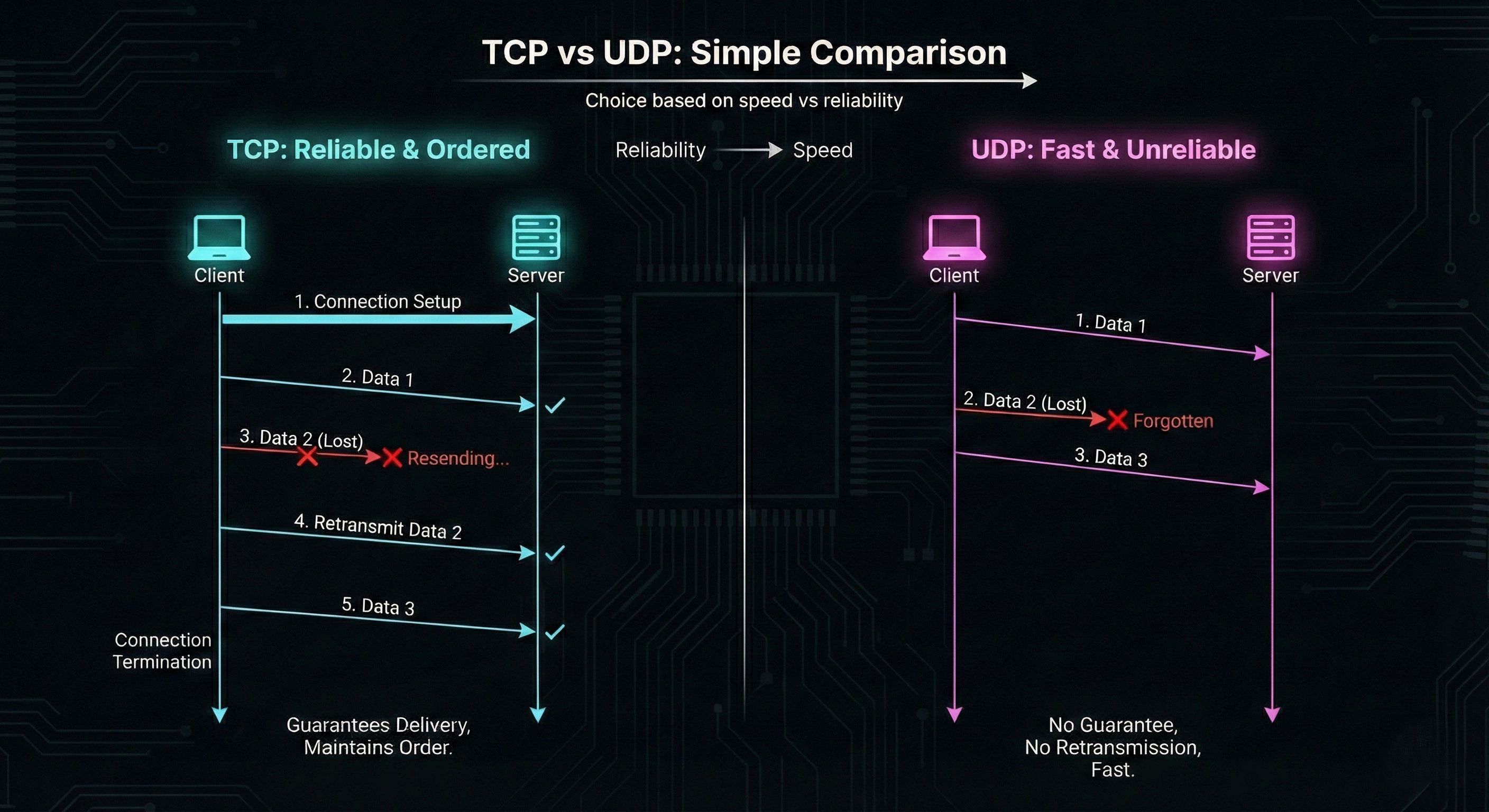
Let’s compare them using behavior.
TCP
Connection-based
Guarantees delivery
Maintains order
Retransmits lost data
Slightly slower
UDP
Connectionless
No delivery guarantee
No order guarantee
No retransmission
Very fast
Simple rule:
TCP = reliable
UDP = speed
TCP vs UDP
TCP - Phone Call / Courier Service
You:
Call someone
Confirm they’re listening
Speak in order
Repeat if they didn’t hear you
End the call properly
That’s TCP.
UDP - Public Announcement / Live Broadcast
You:
Shout information
Whoever hears it, hears it
No confirmation
No retries
That’s UDP.
When to Use TCP
Use TCP when:
Data must arrive
Order matters
Accuracy is critical
Examples:
Websites (HTTP/HTTPS)
APIs
Login systems
Emails
File downloads
Payments
If losing data would cause:
Bugs
Security issues
Corruption
TCP is the right choice.
When to Use UDP
Use UDP when:
Speed matters more than reliability
Small data loss is acceptable
Real-time experience is important
Examples:
Video streaming
Online gaming
Live broadcasts
DNS queries
In these cases:
Late data is worse than missing data
Retransmission is pointless
UDP wins.
What Is HTTP?
Now let’s clear a very common confusion.
HTTP is NOT a transport protocol.
HTTP is an application-level protocol.
Meaning:
It defines how data should look
Not how data travels physically
HTTP defines:
Requests (GET, POST, etc.)
Responses
Status codes
Headers
Body format
But HTTP does not send data by itself.
Where HTTP Fits
Think in layers:
HTTP → What is being said
TCP → How it is safely delivered
IP → Where it is delivered
So:
HTTP uses TCP to travel across the network
HTTP sits on top of TCP.
Relationship Between TCP and HTTP
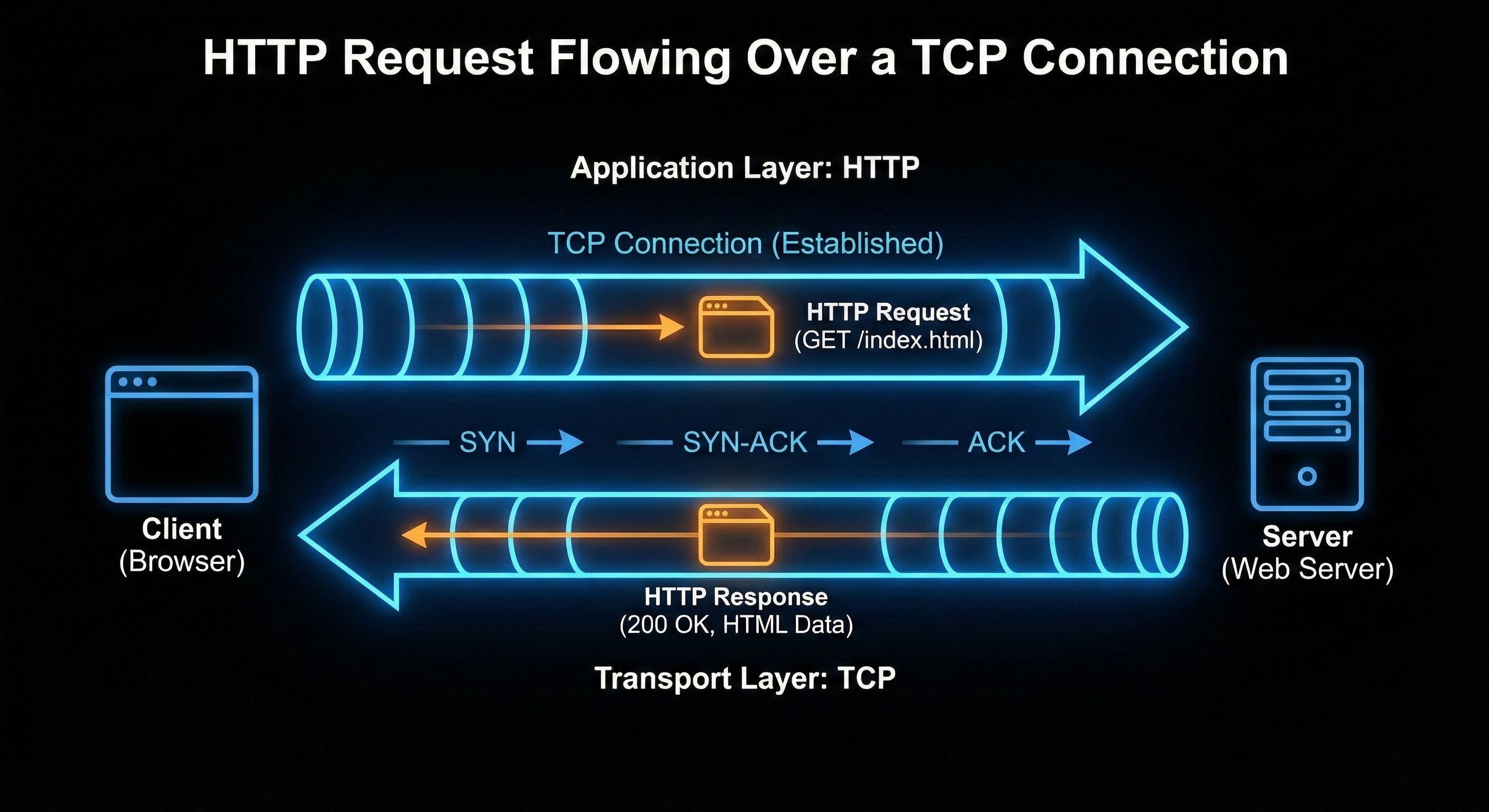
Here’s the flow when you open a website:
Browser wants a page
HTTP request is created
TCP connection is established
HTTP request is sent over TCP
Server responds with HTTP response
TCP ensures reliable delivery
Important point:
HTTP depends on TCP
TCP does not depend on HTTP
Why HTTP Does Not Replace TCP
Because they solve different problems.
TCP → Reliability, order, delivery
HTTP → Meaning and structure of data
HTTP assumes:
“Someone else is handling safe delivery.”
That “someone else” is TCP.
Final Mental Model
Think of it like shipping a letter:
TCP → Reliable courier service
HTTP → The language and format of the letter
UDP → Throwing flyers from a moving vehicle
Different tools.
Different goals.
Final Thoughts
TCP and UDP are not competitors.
They are specialists.
Once you understand:
what kind of data you’re sending
what matters more: speed or reliability
The choice becomes obvious.


