TCP Working: 3-Way Handshake & Reliable Communication
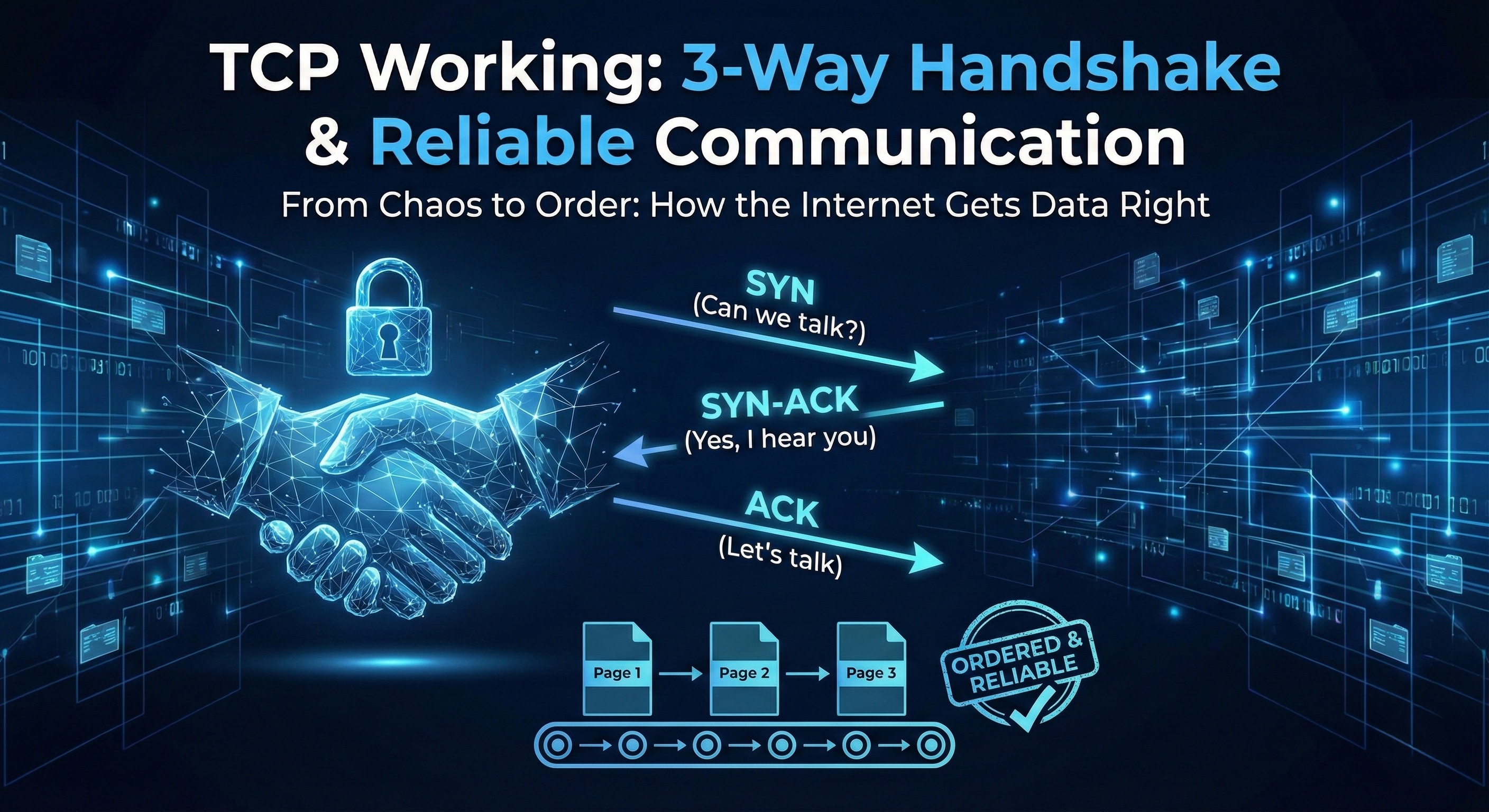
Before we talk about TCP, let’s imagine something.
What If Data Was Sent Without Any Rules?
Suppose you send a long message to a friend:
“HELLO HOW ARE YOU DOING”
But it reaches them like this:
Some letters missing
Some letters duplicated
Some letters out of order
Now imagine this happening with:
Bank transactions
Login requests
API responses
It would be a chaos, right.
This is exactly what the internet would look like without protocols (rules).
And that’s why TCP exists.
What is TCP?
TCP (Transmission Control Protocol) is a communication rulebook.
It ensures that:
Data reaches the correct destination
Data arrives in order
Missing data is resent
Nothing is silently lost
In short:
“TCP makes sure communication is reliable.”
Most of the things that you care about uses TCP:
Websites (HTTP/HTTPS)
APIs
Emails
File downloads
etc.
Problems That TCP Solves
The internet is unreliable by nature (so as the client).
Packets can:
Get lost
Arrive late
Arrive out of order
Get duplicated
TCP solves:
Data loss
Wrong order
Partial delivery
Silent failures
It turns an unreliable network into a reliable connection.
The TCP 3-Way Handshake
Before sending actual data, TCP does something important.
It sets up a connection.
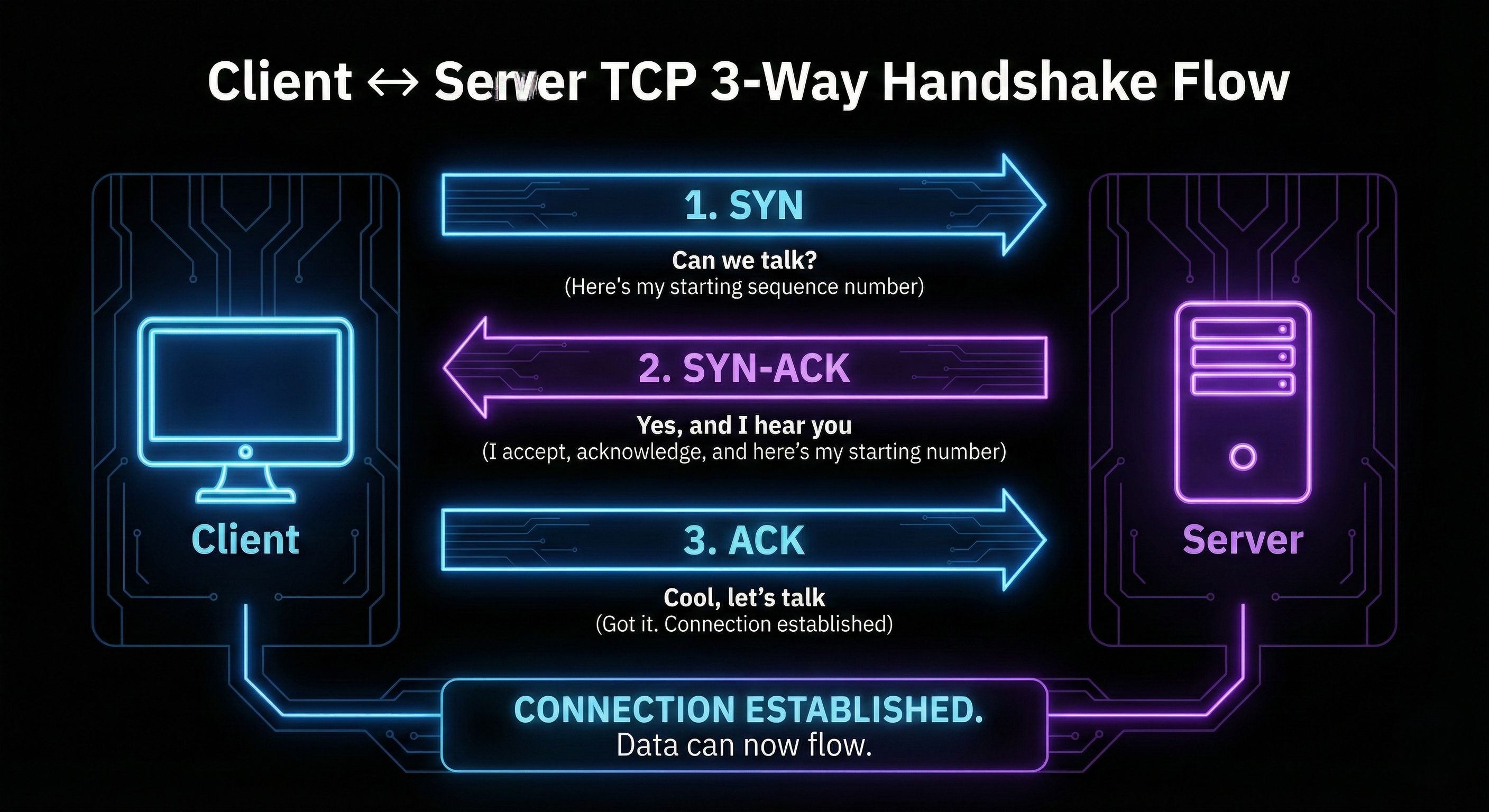
This setup process is called the 3-Way Handshake.
Think of it like starting a phone call.
You don’t just start talking.
You first make sure the other person is ready.
Let’s say Client wants to talk to Server.
Step 1: SYN - “Can we talk?”
Client → Server
“Hey, I want to start a connection.”
This message is called SYN (Synchronize).
Client is saying:
I want to talk
Here’s my starting sequence number
Step 2: SYN-ACK - “Yes, and I hear you”
Server → Client
“Yes, I’m ready, and I got your message.”
This message is SYN + ACK.
Server is saying:
I accept your request
I acknowledge your sequence number
Here’s my own sequence number
Step 3: ACK - “Cool, let’s talk”
Client → Server
“Got it. Let’s start.”
This final ACK confirms:
Both sides are ready
Both sides agree on sequence numbers
Connection established 👍
Now real data can flow.
Why 3 Steps? Why Not Just One?
Because TCP wants to be ensure that:
Client can reach server
Server can reach client
Both sides agree on starting points
Skipping steps could mean:
Talking to a server that isn’t ready
Sending data into the void
TCP prefers certainty over speed.
How Data Transfer Works in TCP
Once the connection is established, data starts flowing.
But TCP doesn’t send data as one big chunk.
It:
Breaks data into segments
Numbers each segment
Tracks what was received
This is where sequence numbers comes in.
Sequence Numbers & Acknowledgements
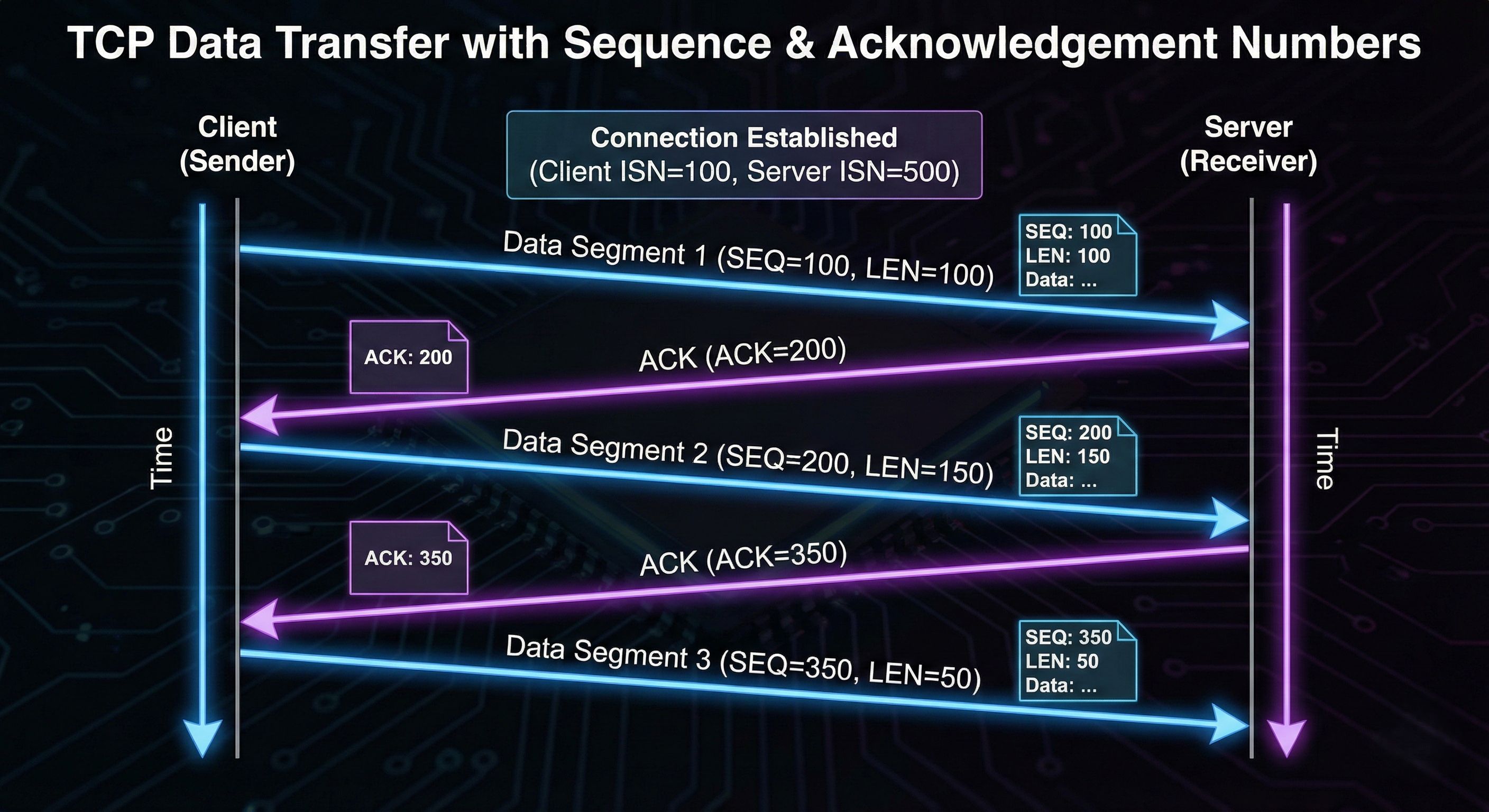
Think of sending pages of a book.
Page 1
Page 2
Page 3
TCP does the same:
Each data segment has a number
Receiver sends back ACKs saying:
“I received everything up to this number”
This helps TCP:
Detect missing data
Maintain correct order
What If a Packet Is Lost?
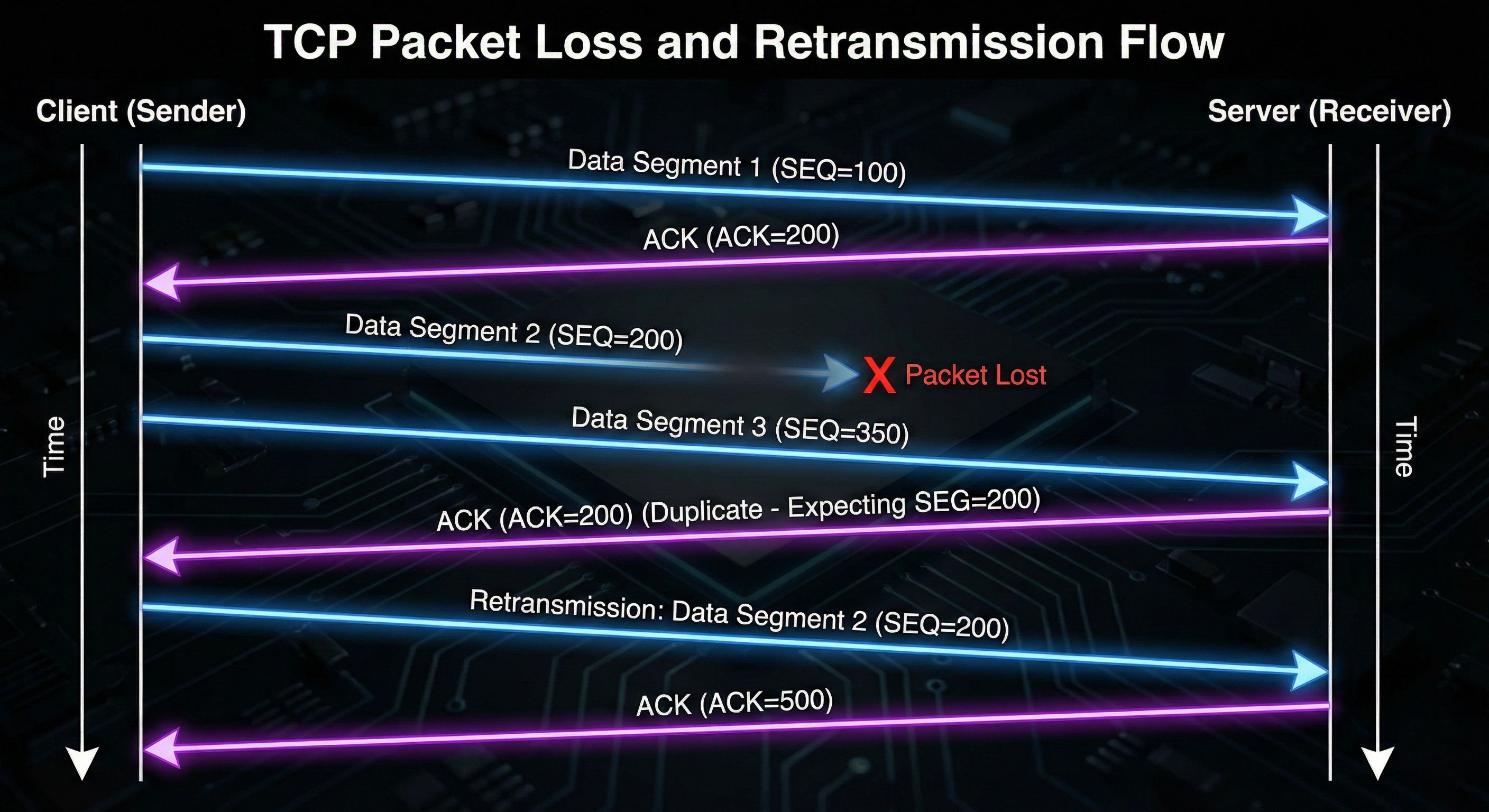
Let’s say:
- Segment 3 never arrives
Receiver sends ACK saying:
“I’m still waiting for segment 3”
TCP on the sender side:
Notices missing acknowledgement
Resends the lost segment
This happens automatically.
You don’t see it.
Your app doesn’t handle it.
TCP does.
How TCP Ensures Reliability, Order, and Correctness
TCP guarantees:
Reliability
Lost data is retransmitted.
Order
Out-of-order segments are rearranged.
Correctness
Checksums ensure data isn’t corrupted.
All of this happens below your application.
That’s why HTTP is reliable.
How a TCP Connection Is Closed
Just like starting a connection needs rules,
ending it also needs rules.
TCP doesn’t just disappear.
Connection Termination (FIN & ACK)
Step 1: FIN - “I’m done sending”
One side sends FIN:
“I have no more data to send.”
Step 2: ACK - “I got that”
Other side acknowledges.
Step 3: FIN (from the other side)
“I’m also done.”
Step 4: ACK
Final acknowledgement.
Connection closed cleanly.
This ensures:
No data is cut off
Both sides agree the conversation is over
TCP Connection Lifecycle
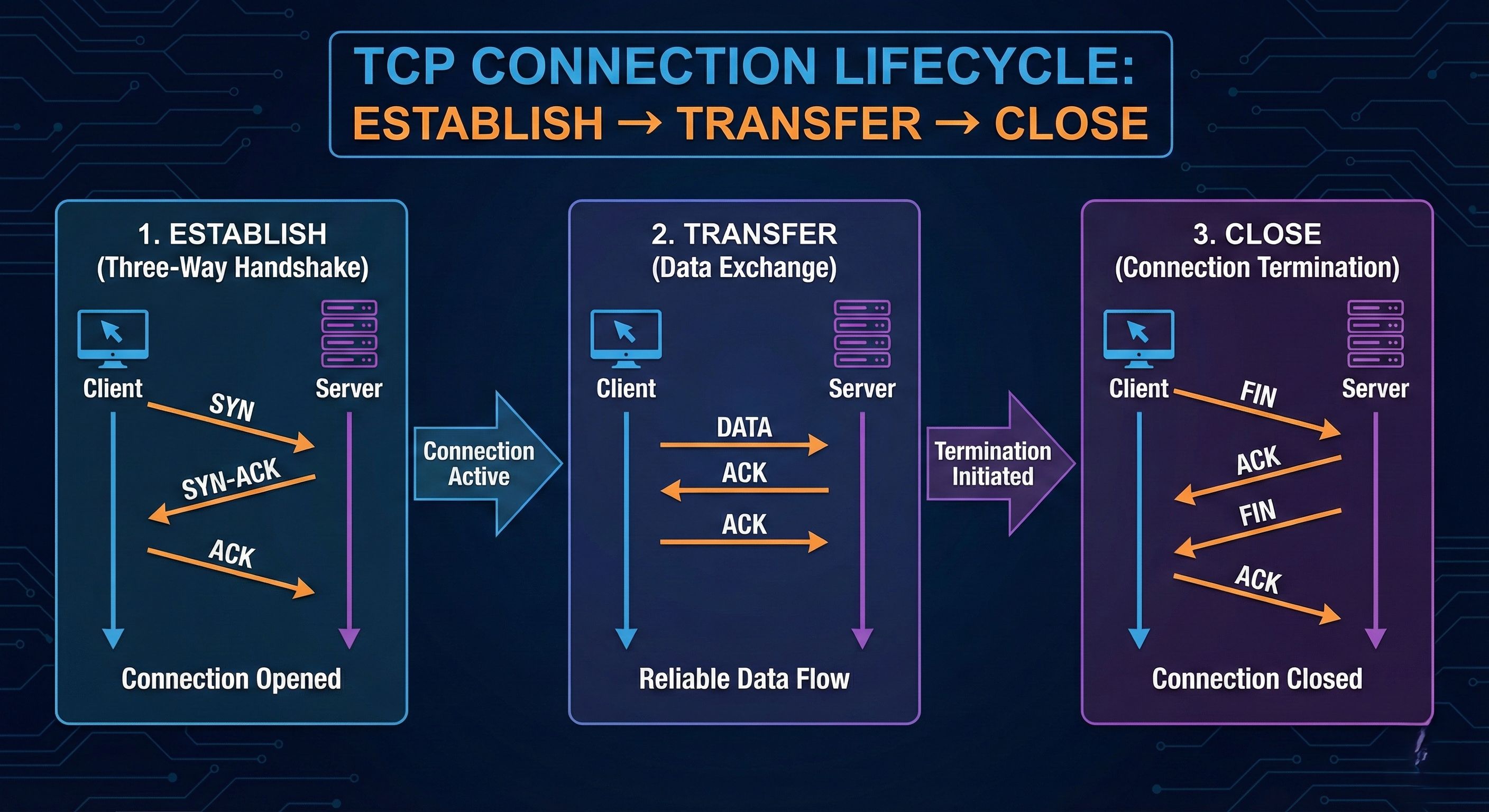
Establish
- 3-Way Handshake (SYN → SYN-ACK → ACK)
Transfer
Data + Sequence Numbers + ACKs
Retransmissions if needed
Close
- FIN → ACK → FIN → ACK
Order. Discipline. Reliability.
Final Mental Model
Think of TCP like a courier service:
Confirms pickup
Numbers packages
Tracks delivery
Resends lost packages
Confirms completion
Without TCP, the internet would be:
Fast
Unreliable
Dangerous
With TCP, it’s:
Slightly slower
Predictable
Trustworthy
You don’t need to memorize TCP.
Just remember why it exists.


